
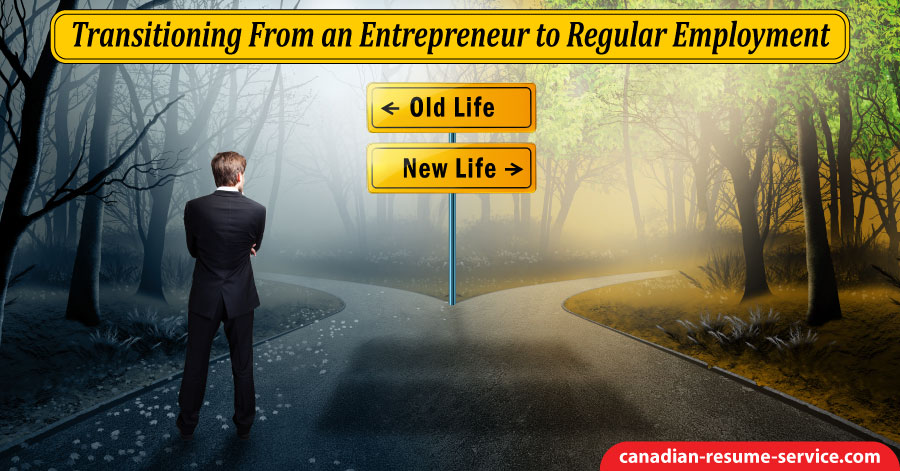

Working for yourself is something that many people aspire to, but few are willing to take the necessary risks. The fears that people have about diving headlong into entrepreneurship are not entirely unfounded. Statistics show that a large percentage of businesses fail within the first year.
Entrepreneurship is Challenging
A very small proportion of businesses stay in operation for 5 years or more. This then means that many people who start businesses find themselves re-entering regular employment to ensure a steady income. With that said, some people start successful businesses, but still make their way back to regular employment to supplement their income. If you are ending your career as an entrepreneur, you will need to know how to handle your job search during the transition.
One of the most difficult things any entrepreneur will have to tackle is moving from a boss mentality to an employee mentality. As an entrepreneur, you had the power to make all key decisions, and you determined the direction of your business. As an employee, you will have to contend with the wishes of your superiors. Sometimes, these may not be what you would have done if you were in a similar position.
Prepare Your Resume
Next, prepare your resume. Note that as an entrepreneur, you have to carefully think through just how you will describe the time you were in business on your resume. Keep it positive, but do not be untruthful. Just because the business you started did not last as long as you wanted it to, don’t hide it or be ashamed.
It’s all about how you present your case. Many recruiters will be drawn to the initiative an applicant demonstrates. The discipline required to establish your own business is a powerful sign that you have the self-drive necessary to execute any job.
Fully Sever Ties with Your Old Business
But even though an entrepreneurial spirit is attractive for recruiters, you must also find ways of calming their fears. That is, recruiters may have doubts about your commitment if you still have ties to your old business.
Many organizations require their employees not to engage in activities that would jeopardize their ability to perform their duties. If you have still not abandoned your business, then the divided attention will make it difficult to function as an effective employee. You will not give your all to the employer.
Find ways of assuring recruiters that indeed you have closed that chapter in your life. Assure them that you’re resolved to be employed for the foreseeable future. If you intend to try your hand again at some point in the future, there is no harm in saying so. Just make sure the time frame isn’t too soon after you’re hired.
Have you made “the big switch” before? Comment and share below! If you need additional help, reach out to Candace to learn more!